
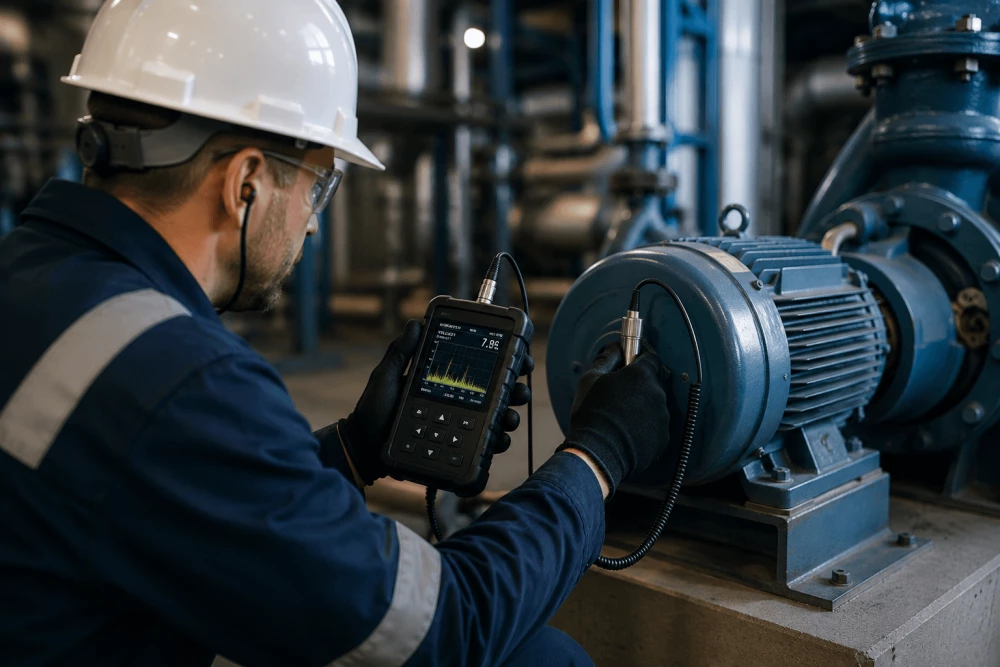
Vibration Monitoring
Get in TouchAt Commercial Testing Services, we specialise in providing professional vibration monitoring solutions and the surrounding area. Our service is critical for maintaining the structural integrity of buildings and ensuring compliance with industry regulations.
We use advanced monitoring equipment to measure vibrations accurately, protecting both new and existing structures. Contact us today for a free quote.
What Is Vibration Monitoring?
Vibration monitoring at Commercial Testing Services involves measuring and analysing vibrations to ensure structural safety and compliance. This service is crucial in various construction and industrial settings, helping to prevent structural damage and minimise operational risks.
We use a range of sophisticated sensors, such as accelerometers and geophones, along with data logging equipment to capture detailed vibration data. These devices enable us to assess vibration amplitudes, frequencies, and duration.
Furthermore, we employ Continuous Wavelet Transform (CWT) methods for in-depth frequency analysis.
Compliance with British standards like BS 7385 and BS 5228 is a key focus to safeguard against excess vibration, which can affect both the structural integrity and the comfort of occupants. Monitoring can be particularly vital in sensitive environments, such as hospitals or historical buildings.
Our team is committed to providing reliable and timely monitoring solutions to ensure your projects adhere to regulatory standards. Contact us to discuss your specific vibration monitoring needs.
What Types of Vibration Monitoring Are Available?
We offer a range of vibration monitoring services tailored to meet different needs:
Continuous Monitoring: Constantly tracks vibrations on-site for dynamic environments, essential for construction sites where heavy machinery could impact nearby structures.
Periodic Monitoring: Records vibrations at set intervals, useful for infrastructure projects like roadworks that may cause intermittent vibrations.
Short-term Monitoring: Provides monitoring over a brief period, ideal for specific project phases such as demolition, where temporary disruption to the environment occurs.
Long-term Monitoring: Extends over months or years, using seismographs and accelerometers to ensure comprehensive data collection for critical infrastructure projects like bridges and tunnels.
Each type of monitoring approach provides unique insights and benefits, helping to safeguard the structural integrity of buildings and infrastructure. Contact us to discuss which option best suits your project requirements.
Which Vibration Monitoring Option Is Best?
Choosing the best vibration monitoring option depends on your project's duration and specific requirements. Vibration monitoring is crucial for ensuring structural integrity and safety, particularly in construction and industrial settings.
Continuous: Ideal for environments with high variability, such as those involving the regular operation of heavy machinery. This option uses equipment like accelerometers and geophones to provide real-time data and alerts, helping prevent structural damage.
Periodic: A cost-effective solution for predictable activities where alterations are minimal. It's commonly used in buildings where regular checks, perhaps weekly or monthly, suffice to monitor ongoing structural health.
Short-term: Suitable for temporary, high-impact work such as demolition or pile-driving. This option offers the flexibility to monitor vibrations during specific phases of a project, ensuring compliance with safe vibration levels.
Long-term: Best for extended projects needing extensive data to analyse trends over months or years. This approach supports compliance with standards such as BS 5228 in the UK and provides data that can inform future construction strategies.
Consider project timelines and risk levels to determine the optimal solution.
Contact us to discuss your specific vibration monitoring needs
What Does Vibration Monitoring Work On?
Our vibration monitoring services are applicable to a variety of settings and items, using technologies like accelerometers and seismographs to deliver precise measurements:
Construction Projects: We monitor vibrations to ensure new builds and renovations maintain structural integrity, adhering to BS 7385-2 and DIN 4150 standards.
Industrial Machinery: Our sensors detect problematic vibrations in equipment such as turbines and compressors, helping to prevent costly breakdowns and extend machinery lifespan.
Historical Structures: We safeguard delicate structures, like listed buildings, during nearby construction work to prevent damage from excessive vibrations.
Public Infrastructure: Monitoring roadworks, bridges, and tunnels is crucial for safety compliance, assisting in achieving ISO 4866 standards for vibration control.
By implementing vibration monitoring, we help mitigate risks and contribute to the longevity and safety of various structures and equipment. Vibration monitoring is not typically needed for small-scale domestic structures without high-risk activities.
When Is Vibration Monitoring Needed?
Vibration monitoring is essential when:
Undertaking construction work near sensitive structures, such as hospitals or schools, to prevent structural damage. We use accelerometers and seismographs to measure vibration amplitude and frequency.
Operating heavy machinery that could affect nearby facilities, where we monitor compliance with ISO 4866 to ensure the safety and integrity of infrastructure.
Renovating historical buildings needing extra protection from vibration-induced cracks or instability, often using continuous monitoring techniques for long-term projects.
Complying with local regulations on environmental vibrations, such as British Standard BS 7385 or guidelines set by local councils, to manage vibration levels effectively.
Act promptly to implement monitoring solutions when these situations arise, using equipment such as tri-axial vibration sensors for precise data collection.
How Does Vibration Monitoring Work?
Vibration monitoring is crucial for safeguarding structural integrity and operational efficiency. The process typically involves the following steps:
Site Assessment: We evaluate the risk of vibration exposure by considering factors such as equipment type, activity frequency, and proximity to sensitive structures. This assessment often involves using ISO 4866 standards for structural vibration.
Equipment Installation: We set up seismographs, accelerometers, and data loggers strategically at identified risk points. Our equipment can measure across multiple axes to ensure comprehensive data capture.
Data Collection: Continuously or periodically, we record vibration levels, using varying sampling rates depending on project needs. Real-time monitoring is especially crucial on construction sites to prevent potential harm to surrounding buildings.
Analysis and Reporting: Leveraging software tools, we analyse the data to identify potential risks and compliance issues. Our reports include detailed graphs and threshold comparisons.
Mitigation Recommendations: We offer solutions to reduce and manage vibrations, such as isolation pads or modifying operational practices, ensuring the safety and longevity of structures.
This process ensures structured and compliant monitoring, providing insights that are indispensable for sectors like construction, manufacturing, and power generation.
How Long Does Vibration Monitoring Take?
The length of time for vibration monitoring varies based on project requirements and objectives. Continuous and long-term monitoring, often used in infrastructure projects such as bridges and tunnels, may span months or even years.
This period ensures comprehensive data collection and analysis of the structure's response to environmental factors and usage. Short-term monitoring, on the other hand, might last only a few weeks and is typically employed in construction sites to comply with local regulatory standards or assess specific activities like pile driving or demolition.
We use equipment such as triaxial accelerometers and geophones calibrated to ISO standards to ensure precise data accuracy. These devices can be configured to gather high-frequency data, providing insights into the dynamic behaviour of the monitored structures.
Our installation takes less than a day, ensuring minimal disruption to your operations while setting the foundation for reliable data acquisition.
Contact us to discuss your specific needs
Who Needs Vibration Monitoring?
Various clients across benefit from our vibration monitoring services:
Construction Companies: Building projects like bridges, tunnels, or high-rises frequently require monitoring to comply with standards such as BS 7385 for controlling groundborne vibration levels during construction.
Industrial Manufacturers: Those operating heavy machinery can avoid machinery downtime by using vibration monitoring to detect imbalances and misalignments early, reducing maintenance costs and increasing operational efficiency.
Government Agencies: These entities oversee public infrastructure updates, ensuring that vibrations do not negatively impact nearby residential areas, complying with public safety regulations.
Heritage Organisations: Protecting listed buildings from structural damage involves monitoring vibrations to ensure preservation without intrusive renovations, often adhering to guidelines such as BS 8223.
Our service provides critical data that supports decisions for any project needing meticulous vibration risk management, effectively reducing potential for damage or disruption.
If you require vibration monitoring, Get in Touch
How Much Does Vibration Monitoring Cost?
Vibration monitoring costs typically start from around £500 for a 30-day trial. This price generally includes the installation of monitoring equipment such as accelerometers and data loggers, which continuously measure and record vibration data from critical machinery.
For more extensive monitoring programmes, additional sensor technologies and monitoring systems may be required depending on the machinery, operational environment, and project requirements. Long-term monitoring arrangements are also available through a 3-year contract with bespoke pricing based on the scope and complexity of the installation.
Factors influencing the cost include the number of monitored assets, sensor requirements, monitoring infrastructure, reporting frequency, remote monitoring capabilities, and the level of engineering analysis required.
In addition to vibration monitoring, we also provide Predictive Maintenance, Condition Monitoring, and Food Production Monitoring services, allowing businesses to implement a comprehensive asset reliability and maintenance strategy through a single provider.
Costs vary depending on the monitoring duration, equipment requirements, and level of analysis required, ensuring a solution tailored to your operational needs. Contact us today to discuss your project and receive a personalised quotation.
What Are the Benefits of Vibration Monitoring
Vibration monitoring offers several advantages that are crucial in various industrial sectors. By employing advanced sensors such as accelerometers and geophones, we can detect even minor vibrations that may otherwise go unnoticed.
This proactive approach helps protect the structural integrity of buildings by identifying potential weaknesses in foundations or walls, particularly essential in construction and civil engineering projects.
Effective risk management is achieved by routinely analysing vibration data, which helps us implement timely interventions to prevent damage. This method ensures compliance with BS 7385 standards, which govern the construction industry regarding human response to vibration.
By maintaining regulatory compliance, we help clients avoid legal penalties and contribute to public safety.
Cost savings stem from predicting and addressing issues before they escalate into costly repairs, making vibration monitoring a sound investment. With data-driven insights, stakeholders can make informed decisions about project planning and execution, minimising the chances of downtime or disruptions.
Ultimately, vibration monitoring ensures your projects are safe and efficient, protecting both your assets and investments.
What Regulations Apply to Vibration Monitoring?
Vibration monitoring must comply with UK standards and regulations such as BS 7385 and BS 5228-2. These standards guide acceptable vibration levels to avoid causing structural damage or disturbance to sensitive environments.
BS 7385 focuses on the evaluation and measurement of vibration-induced damage in buildings, while BS 5228-2 addresses the control of noise and vibration on construction and open sites. Additionally, adherence to the Control of Vibration at Work Regulations 2005 is essential to protect employees from risks associated with workplace vibration exposure.
Understanding these regulations ensures compliance and helps prevent legal issues, especially for construction companies, infrastructure projects, and urban developments. Regular compliance checks and the use of specialised equipment such as seismographs and accelerometers are recommended to accurately monitor vibrations and maintain safe levels.
If you need assistance, our expert team is ready to guide you through the process.
Why Choose Commercial Testing Services for Vibration Monitoring?
At Commercial Testing Services, we deliver precise and reliable vibration monitoring. As part of our wider machine health monitoring services, our experienced team uses advanced sensor technology, including accelerometers and velocity transducers, to collect accurate machine condition data and provide continuous insight into equipment performance.
By monitoring vibration trends across industrial machinery and equipment, we help maintenance teams identify developing mechanical issues before they lead to unexpected failures or costly downtime.
Our services support predictive maintenance strategies by detecting changes in vibration behaviour associated with bearing wear, shaft misalignment, imbalance, looseness, and other mechanical faults.
Our reports include detailed spectral analysis, time history graphs, and long-term trend data, providing a clear picture of machine condition over time to support maintenance planning and asset management.
We offer flexible service terms, including a 30-day trial from £500 and opportunities for a 3-year monitoring contract, providing a cost-effective solution for businesses looking to improve equipment reliability, reduce unplanned downtime, and maximise the lifespan of critical assets.
Contact us to ensure your project’s compliance and structural safety
Frequently Asked Questions
How much does vibration monitoring cost?
Typically, our vibration monitoring services start from around £500 for a 30-day trial. The final cost depends on the duration and complexity of your monitoring needs.
How long does vibration monitoring take?
Installation typically takes less than a day. The duration of monitoring varies, with some projects lasting weeks and others requiring long-term monitoring over several months.
How often should vibration monitoring be conducted?
The frequency varies by project demands. Some require continuous monitoring, while others only need periodic or short-term monitoring based on specific activities.
Is vibration monitoring necessary for all construction projects?
Not all projects, but it is crucial for those near sensitive structures or requiring regulatory compliance, ensuring safety and integrity.
Can vibration monitoring be done in areas?
Our vibration monitoring services cover and adjacent areas, including the postcode. Contact us to see how we can assist your project.
Get a Free Quote for Vibration Monitoring
Contact us today to arrange a vibration monitoring solution tailored to your needs. Get a Free Quote