
Predictive Maintenance
Get in TouchAt Commercial Testing Services, we specialise in predictive maintenance services, designed to optimise the reliability and efficiency of your equipment.
Using advanced diagnostic tools and condition-monitoring technology, we help identify potential equipment failures before they occur.
Our services are tailored for diverse industries, ensuring minimal downtime and cost savings. We proudly cover and the surrounding postcode area.
Contact us to discover how our approach can benefit your operations
What Is Predictive Maintenance?
Predictive maintenance involves using data-driven insights to foresee potential equipment failures. At Commercial Testing Services, we use advanced sensors to collect real-time data, enabling us to perform accurate condition monitoring on machinery.
We employ techniques such as vibration analysis, infrared thermography, and oil analysis to detect anomalies early. Vibration analysis measures oscillations in equipment components to identify misalignments or bearing failures.
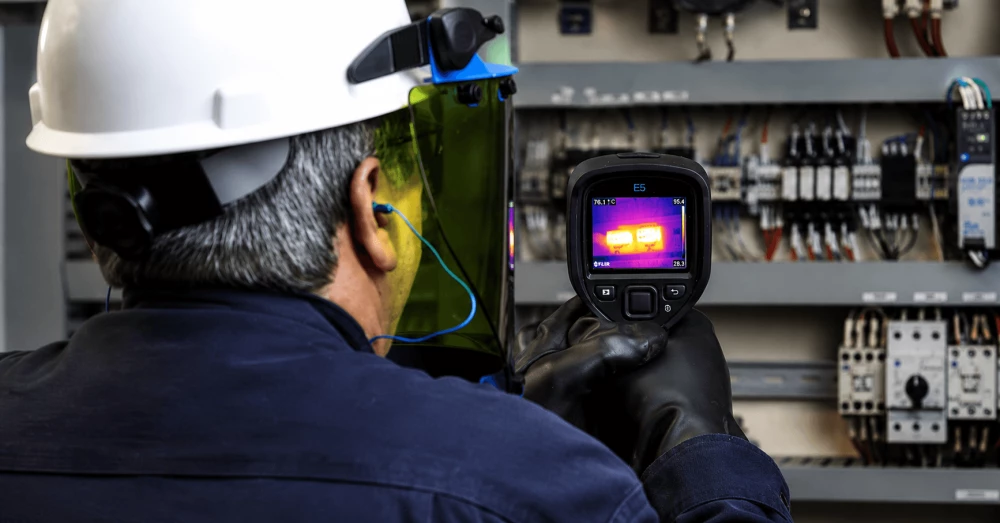
Infrared thermography detects heat variations that could indicate electrical issues or friction in rotating parts, while oil analysis examines lubricant conditions to spot contamination or wear.
Together, these methods significantly reduce unexpected breakdowns and extend equipment lifespan by focusing on actual wear and operational conditions rather than scheduled intervals.
Our predictive maintenance services benefit diverse sectors, including manufacturing, utilities, and transport, ensuring optimal performance and operational efficiency.
What Types of Predictive Maintenance Are Available?
We offer various predictive maintenance methods tailored for different industrial and operational needs, ensuring optimal performance and reduced downtime.
Vibration Analysis: Detects abnormalities in the movement of machinery parts, crucial for early fault detection in rotating equipment such as motors and pumps. We use a range of sensors and accelerometers to measure vibration levels and frequencies.
Thermography: Uses infrared cameras to locate hotspots indicating equipment stress. This method is especially effective for electrical inspections, enabling the early detection of overheating circuits and components, preventing potential failures.
Ultrasonic Testing: Identifies high-frequency sounds made by deteriorating components, often used in detecting leaks in compressed air systems and faulty bearings in manufacturing plants.
Oil Analysis: Monitors lubricant condition and contamination levels, providing insight into gear and engine wear. Through spectrometric and particle count analysis, we can predict equipment failures before they occur.
Each type provides specific advantages depending on the equipment and environment, helping businesses maintain efficient operations. Get in touch to discuss how our predictive maintenance services can benefit your facility.
Which Predictive Maintenance Option Is Best?
The best predictive maintenance option varies based on equipment type and operational needs, and selecting the appropriate method can significantly enhance equipment lifespan and reliability:
Vibration Analysis is ideal for rotating machinery such as turbines and pumps. It detects imbalance, misalignment, and bearing failures by measuring vibration levels, often using accelerometers or velocity sensors.
Thermography is best for electrical installations like switchboards and transformers. By capturing thermal images, it helps prevent overheating and insulation failures, following standards such as ISO 18436-3 for thermography and condition monitoring.
Ultrasonic Testing works well for detecting air leaks, steam traps, and valve malfunctions in a variety of settings, including HVAC systems. This method uses high-frequency sound waves to identify disturbances in normal operations.
Oil Analysis suits machines with a high degree of lubrication dependency, like gearboxes and hydraulic systems. It assesses oil condition, contamination, and wear particle levels, providing insight into potential points of failure.
Understanding your machine's operational environment and specific failure modes is crucial when choosing a method. Contact us to discuss your predictive maintenance needs.
What Does Predictive Maintenance Work On?
Predictive maintenance is applicable to various equipment types, including HVAC systems, industrial machinery, and electrical installations.
By using methods such as vibration analysis, thermal imaging, and oil analysis, we can monitor the condition of machines to identify potential failures.
This service effectively prevents issues in machines with rotating parts, heat dissipation requirements, and fluid systems. Critical components such as motors, pumps, and compressors often benefit from these techniques.
We use equipment like infrared thermography cameras and ultrasound detectors to assess potential issues in bearings, gearboxes, and transformers. Moreover, predictive maintenance often involves implementing sensors and remote monitoring systems, such as IoT-enabled devices, to track performance metrics continuously.
However, it may not be suited for non-mechanical assets or extremely aged equipment that lacks sensor compatibility. By detecting anomalies early, we enhance equipment lifespan and reduce operational downtime.
Contact us to learn more about how predictive maintenance can safeguard your assets.
When Is Predictive Maintenance Needed?
Predictive maintenance is crucial for operations involving high-value or critical machinery. It is often initiated when equipment shows early signs of wear, such as unusual vibrations, increased energy consumption, or irregular operation patterns.
Technologies like vibration analysis, thermal imaging, and ultrasonic testing are commonly used to detect these early signs.
Companies in industries such as manufacturing, transportation, and energy aiming to minimise downtime and maintenance costs use predictive maintenance to ensure smooth and uninterrupted operations.
Implementing predictive maintenance not only extends the lifespan of machinery but also complies with industry standards like ISO 55000 for asset management. Regular monitoring schedules typically range from weekly to monthly, depending on equipment usage intensity.
Reach out to us to learn more about implementing this in your facility.
How Does Predictive Maintenance Work?
Predictive maintenance follows this process:
Data Collection: Use sensors such as vibration sensors, infrared thermography, and ultrasonic detectors to gather operational data from equipment in real time. This includes monitoring temperature, pressure, and rotational speed.
Analysis: Process the collected data using machine learning algorithms and statistical models to identify patterns, emerging trends, or anomalies that may indicate wear or potential failures. This requires sophisticated software that can handle large volumes of data and provide actionable insights.
Diagnosis: Determine potential faults using condition-monitoring tools like oscilloscopes and spectrum analysers. This step may also involve comparing equipment data against industry standards like ISO 10816 for vibration severity levels.
Action: Implement corrective actions such as recalibration, part replacement, or lubrication based on findings to prevent unscheduled downtime. This often involves scheduling maintenance during planned production stops to minimise disruption.
Each step is pivotal for maintaining equipment health and operational efficiency, ensuring that businesses meet their production targets and reduce the long-term costs associated with unexpected equipment failures. Contact us to learn more about enhancing your maintenance strategy.
How Long Does Predictive Maintenance Take?
The duration for carrying out predictive maintenance varies based on the complexity and type of equipment being assessed. Typically, conducting a full analysis and maintenance cycle can take from several hours up to a few days.
For example, assessing HVAC systems may take less time compared to large-scale industrial machinery. We employ advanced techniques such as vibration analysis, infrared thermography, and oil analysis to identify potential issues early.
These methods help predict equipment failures and allow us to schedule maintenance during non-peak hours, minimising operational disruptions. Once implemented, regular monitoring is continuous, requiring only periodic data evaluations and adjustments according to real-time sensor inputs.
Our continuous monitoring system can detect anomalies, providing alerts for timely intervention. To understand your specific requirements and schedule a consultation, contact us today.
Who Needs Predictive Maintenance?
Industries that benefit from predictive maintenance include manufacturing, chemical processing, and utilities. Facilities operating high-stakes equipment, such as production lines or power plants, find these services essential for maintaining operational continuity.
Predictive maintenance employs techniques like vibration analysis, thermography, and oil analysis to monitor equipment health and anticipate failures before they occur. Manufacturing plants, for instance, rely on ultrasonic testing to detect leaks in compressed air systems, while chemical processors use infrared thermography to identify hotspots in thermal insulation.
Moreover, utilities employ partial discharge analysis to ensure the integrity of electrical systems, preventing costly outages. By addressing issues proactively, we help businesses minimise downtime and extend machinery lifecycle.
Get in touch to discuss tailored solutions
How Much Does Predictive Maintenance Cost?
The cost of predictive maintenance can range widely, typically starting from £3,000 to £10,000 per asset annually. This variation depends on equipment complexity, monitoring methods like vibration analysis or infrared thermography, and the frequency of inspections.
For instance, monitoring heavy machinery may involve online condition monitoring systems, requiring sensors and data loggers to track performance metrics such as temperature and wear. Additionally, we may use data analytics platforms to identify trends and predict failures, which can also affect pricing.
Custom analysis, including spectral analysis for rotating equipment, and specialised testing equipment might incur incremental charges. We comply with industry standards like ISO 17359, ensuring a reliable assessment of asset health.
Contact us for a detailed quote
What Are the Benefits of Predictive Maintenance?
Predictive maintenance provides businesses with valuable insight into the condition of their machinery, helping maintenance teams identify developing issues before they result in costly equipment failures or unplanned downtime.
Reduced Downtime: Continuous monitoring and condition-based maintenance strategies help detect developing faults early, allowing maintenance to be scheduled before machinery failures disrupt production.
Lower Maintenance Costs: By carrying out maintenance when it is needed rather than on fixed intervals, businesses can reduce unnecessary servicing, improve resource allocation, and lower long-term maintenance expenditure.
Extended Equipment Lifespan: Early identification of wear, imbalance, bearing deterioration, misalignment, and other developing faults helps reduce unnecessary stress on machinery and maximise the lifespan of critical assets.
Improved Operational Efficiency: Real-time machine condition data enables maintenance teams to make informed decisions, optimise maintenance schedules, and improve the reliability of production equipment.
Better Asset Management: Historical monitoring data provides a documented record of machine condition over time, supporting maintenance planning, equipment performance reviews, and long-term asset management strategies.
Commercial Testing Services delivers predictive maintenance solutions using advanced monitoring technologies, including Condition Monitoring, Machine Health Monitoring, Vibration Monitoring, and Food Production Monitoring, providing businesses with a complete approach to improving equipment reliability, reducing downtime, and optimising operational performance.
What Regulations Apply to Predictive Maintenance?
While predictive maintenance is a proactive approach, certain industries must adhere to specific UK regulations, such as the Health and Safety at Work Act and guidelines from the Health and Safety Executive (HSE), particularly when handling hazardous equipment. For the manufacturing sector, the Provision and Use of Work Equipment Regulations (PUWER) mandates regular assessments to prevent equipment failure.
Additionally, the Control of Substances Hazardous to Health (COSHH) regulations require monitoring air quality and emissions levels to mitigate risks associated with harmful substances.
In construction, the Lifting Operations and Lifting Equipment Regulations (LOLER) ensure that all lifting equipment is subject to routine maintenance checks. Complying with these standards helps prevent accidents and enhances the longevity of machinery.
Ensure compliance by working with certified professionals, who can provide regular audits and condition monitoring to meet regulatory requirements effectively.
Why Choose Commercial Testing Services for Predictive Maintenance?
Commercial Testing Services is committed to delivering excellent predictive maintenance services. We employ advanced diagnostic technologies such as infrared thermography and vibration analysis to detect potential equipment issues before they result in costly failures.
Our services help optimise machinery performance, reduce downtime, and prolong asset lifespan, catering to industrial facilities, manufacturing plants, and commercial properties.
Our experienced team follows industry best practices, adhering to standards like ISO 17359 and ISO 9001, ensuring your equipment's reliability and operational efficiency. We use a range of tools, including ultrasonic detectors and data analytics software, to provide comprehensive analysis and actionable insights.
We offer flexible solutions, including a £500 30-Day trial and a 3-year contract, to ensure your satisfaction. By choosing our services, you gain access to a dedicated partner focused on maintaining your equipment's peak performance.
Contact us today to explore how we can assist you
Frequently Asked Questions
How much does predictive maintenance cost?
Predictive maintenance typically costs between £3,000 and £10,000 per asset annually, depending on equipment complexity and monitoring approaches.
How long does predictive maintenance take?
The process generally takes several hours to a few days, depending on equipment type and the analysis required.
Is predictive maintenance necessary for all equipment?
Predictive maintenance is most beneficial for high-value or critical equipment, where unexpected failures would incur significant downtime costs.
Can predictive maintenance extend equipment lifespan?
Yes, predictive maintenance can significantly prolong equipment lifespan by addressing early signs of wear and avoiding severe failures.
What industries benefit most from predictive maintenance?
Manufacturing, utilities, and chemical processing industries benefit most from predictive maintenance due to their reliance on high-value equipment.
Get a Free Quote for Predictive Maintenance Services
For comprehensive predictive maintenance solutions, contact Commercial Testing Services.