
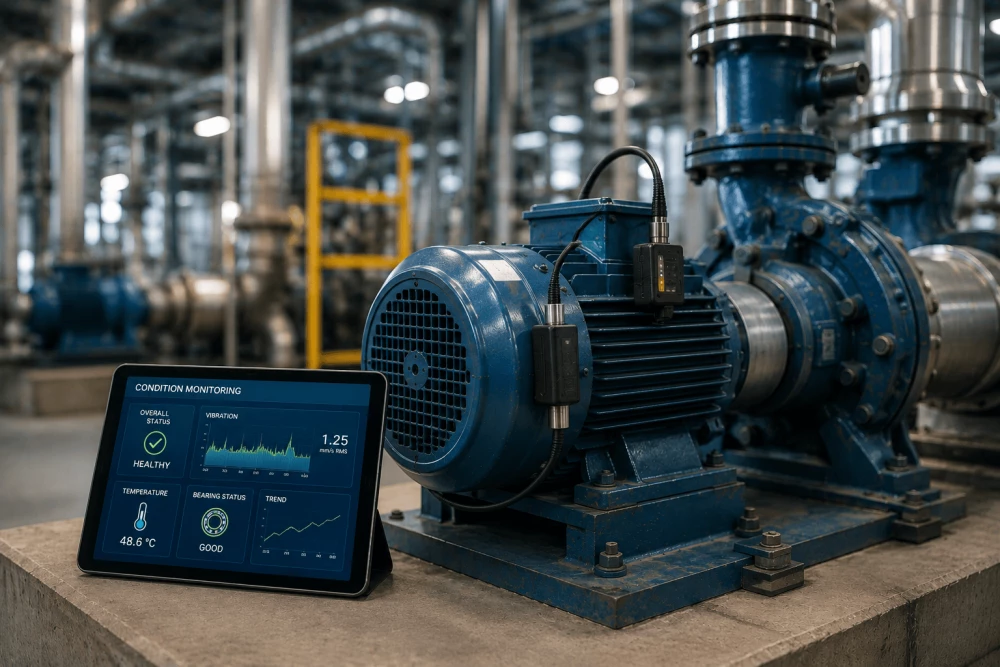
Condition Monitoring
Get in TouchAt Commercial Testing Services, we specialise in condition monitoring for industrial equipment.
Our service uses vibration analysis, thermography, and oil analysis to diagnose equipment health and prevent failures.
We cater to various sectors, including manufacturing and energy, ensuring optimised performance and reduced downtime. We offer flexible contracts over a 3-year period and a 30-day trial for £500.
Our services cover the entire area.
Contact us today to enhance operational efficiency
What Is Condition Monitoring?
Condition monitoring is a predictive maintenance process that identifies equipment issues. At Commercial Testing Services, we monitor vibrations, temperatures, and lubricant conditions to predict and prevent equipment failures.
We use advanced techniques such as thermography and ultrasonic analysis to detect anomalies in machinery. Employing equipment like vibration analysers and infrared cameras, we measure deviations from regular operational standards.
These checks are particularly useful for sectors such as manufacturing and energy production, where mechanical failures can lead to costly interruptions.
This service is essential for industries relying on continuous operations, minimising unexpected downtimes and prolonging equipment lifespans.
By implementing these proactive measures, we help businesses in the area maintain optimal operational efficiency, adhering to safety and industry standards like ISO 17359 for condition monitoring.
What Types of Condition Monitoring Are Available?
We provide several types of condition monitoring, each tailored to specific needs, employing various industry-standard techniques.
Vibration Analysis: Uses sensors such as accelerometers to detect imbalances, misalignments, or mechanical looseness in machinery, helping to prevent unexpected breakdowns.
Thermography: Involves using infrared cameras to identify hot spots through temperature variations, crucial for detecting issues in electrical systems and mechanical components.
Oil Analysis: Monitors lubricant properties for viscosity changes and contamination, making use of spectrometric analysis to detect wear particles and prevent component failure.
Ultrasound Testing: Uses high-frequency sound waves to pinpoint air or gas leaks and electrical discharges, aiding in energy loss reduction and safety compliance.
These services offer a overview of machinery health, enabling clients to maintain efficiency and safety.
Contact us to discuss solutions that can benefit your operations
Which Condition Monitoring Option Is Best?
Choosing the right condition monitoring method depends on several elements, including equipment type, operational environment, and maintenance priorities.
Vibration Analysis: Best for rotating machinery like motors, pumps, and compressors to detect early wear, imbalances, or misalignments. We typically use accelerometers and velocity sensors to assess these conditions, providing insights into potential equipment failures.
Thermography: Ideal for electrical panels and high-heat environments such as kilns and boilers, where infrared cameras can identify hotspots indicative of faulty connections, ensuring compliance with safety standards like BS EN 13201.
Oil Analysis: Suits hydraulic and gear systems by examining fluid health, including viscosity, acidity, and contamination levels. Specialised tests such as spectroscopy determine the presence of wear metals, extending equipment life and reliability.
Ultrasound Testing: Effective for detecting air and steam leaks as well as electrical issues like arcing and corona in switchgear, ultrasound devices provide precise diagnostics to prevent energy loss and equipment damage.
We can assist in selecting the option that best fits your operational requirements.
What Does Condition Monitoring Work On?
Condition monitoring is applicable to a wide range of equipment including pumps, motors, turbines, compressors, and gearboxes. It involves techniques such as vibration analysis, thermography, and oil analysis to detect early signs of wear or failure.
For example, vibration sensors can identify imbalance or misalignment in rotating equipment, while thermography uses infrared cameras to spot overheating components.
This service is crucial for systems where efficiency and longevity are paramount, such as those in manufacturing, energy production, and transport logistics.
Regular monitoring can prevent costly downtime and extend the life cycle of equipment by identifying issues before they escalate. While condition monitoring is highly adaptable, it is less suitable for non-mechanical elements like structural components.
For these, techniques like ultrasonic testing or visual inspections are typically employed. Contact us to discuss how we can apply condition monitoring to your industrial assets.
When Is Condition Monitoring Needed?
Condition monitoring is needed when there are concerns over equipment reliability or performance. We often deploy our services proactively to prevent failures, or when increased vibration, noise, or heat signals potential problems.
Techniques such as vibration analysis and thermography are employed for early detection of issues in machinery.
Vibration analysis helps identify imbalance, misalignment, and bearing wear, while thermography monitors temperature variations in engines and electrical systems.
Technologies like ultrasonic leak detection can also be used for assessing compressed air systems and identifying leaks before they escalate.
Regular monitoring helps avert costly emergency repairs, ensuring operations in the area run smoothly. By adhering to industry standards such as ISO 17359 for condition monitoring processes, we ensure systematic and effective monitoring for various sectors, including manufacturing plants, power generation facilities, and commercial buildings.
We are ready to assist with any condition monitoring needs to maintain your equipment's optimal performance.
How Does Condition Monitoring Work?
Condition monitoring involves several key steps to deliver accurate assessments for our clients across various sectors, including manufacturing, energy, and transportation.
Data Collection: We gather baseline data using specialised sensors and diagnostic equipment like vibration analyzers and thermal imaging cameras, tracking parameters such as temperature, vibration, and noise levels. This phase is critical for creating an accurate profile of the machinery's current state.
Data Analysis: The collected data is processed through advanced software algorithms designed to detect anomalies and identify trends. We use tools such as FFT analyzers and condition monitoring software to pinpoint issues and predict failures before they occur.
Reporting: Our team generates detailed reports that include pattern and trend analysis, enabling us to forecast potential equipment failures. These insights help in planning maintenance activities and reducing unexpected downtime, which can save significant costs.
Action: Guided by our expert team, we implement corrective measures, which may involve precision maintenance activities or equipment upgrades as per ISO quality standards.
Connect with us to ensure your operations are continually optimised and avoid costly disruptions.
How Long Does Condition Monitoring Take?
Condition monitoring typically involves ongoing processes that vary in duration based on the equipment and systems in use. The initial setup phase encompasses installing sensors and configuring data acquisition systems, which can take a few hours.
The setup includes using tools like vibration analysers and thermal imaging cameras, ensuring accurate data collection. Subsequent analyses use software to process data quickly, often completing in less than an hour, depending on the complexity of the equipment being monitored, such as turbines or compressors.
Regular condition monitoring not only helps detect long-term trends but also adheres to standards such as ISO 17359 for condition monitoring of machinery, supporting preventive maintenance schedules by identifying potential failures before they occur. Contact us for a consultation to tailor a monitoring schedule to your specific needs.
Who Needs Condition Monitoring?
Industries such as manufacturing, power generation, and transport benefit immensely from condition monitoring. In the manufacturing sector, early detection of machinery wear through vibration analysis and thermography can prevent costly downtimes.
Power generation facilities use oil analysis and ultrasonic testing to ensure turbines and generators operate efficiently, detecting issues like oil degradation and steam leaks before they escalate.
Transport companies, including rail and logistics providers, employ acoustic emission testing to monitor vehicle components, extending the lifespan of engines and axle bearings. Companies with critical infrastructure and continuous operations rely on our services to maintain uptime and minimise disruptions.
At Commercial Testing Services, we adhere to ISO 17359 standards, ensuring reliable and accurate monitoring. Our tailored solutions fit various business scales within the area, fostering operational resilience and efficiency.
Contact us to learn how our condition monitoring can support your operations.
How Much Does Condition Monitoring Cost?
Condition monitoring costs can vary based on several factors, including equipment complexity, the number of sensors required, and the specific monitoring methods employed.
Our services are typically priced from around £500 for a 30-day trial, which allows you to evaluate our vibration analysis and thermographic imaging methods.
For industries dealing with critical machinery, we provide real-time monitoring via continuous data acquisition systems, which might be reflected in the cost.
Ongoing contracts are available, offering comprehensive coverage typically on a 3-year basis, which includes regular maintenance checks and data analysis reports in line with ISO 17359 standards.
Costs are confirmed upon quotation after assessing your specific needs. For a detailed estimate tailored to your equipment and facilities, please contact us directly.
What Are the Benefits of Condition Monitoring?
Condition monitoring offers numerous benefits, including:
Reduced Downtime: By implementing techniques like vibration analysis and thermal imaging, we can prevent unexpected breakdowns and avoid costly disruptions.
Cost Efficiency: Through regular data collection and pattern analysis, maintenance costs are lowered over time, as small issues are detected and addressed before they escalate.
Extended Equipment Life: Monitoring methods such as oil analysis help minimise wear, enhancing longevity by ensuring machinery operates under optimal conditions.
Increased Safety: Identifying potential hazards early, using acoustic monitoring and ultrasound technology, ensures that safety measures are proactively implemented.
Additionally, condition monitoring supports compliance with safety standards like ISO 17359, providing structured insights into the health of assets. These advantages make it an invaluable part of asset management strategies.
Contact us to integrate condition monitoring into your asset management plan.
What Regulations Apply to Condition Monitoring?
While specific UK regulations for condition monitoring are limited, industries maintain standards for equipment maintenance relevant to health and safety legislation. Compliance with ISO 17359:2018 for condition monitoring and diagnostics of machines ensures our services meet industry standards.
Besides ISO 17359, we also align with ISO 55000, which provides guidelines on asset management systems and lifecycle management of physical assets. This is critical for sectors such as manufacturing and energy, where equipment downtime can lead to significant financial loss.
Furthermore, we adhere to the Health and Safety at Work Act 1974, ensuring that our operations prioritise workplace safety by predicting equipment failures. This is particularly important for power generation and oil & gas industries, where equipment failure can have serious consequences.
Our team uses advanced vibration analysis and thermal imaging technologies to detect potential issues early, mitigating risks and supporting compliance with these regulations and standards. For more information or to discuss your specific requirements, contact us today.
Why Choose Commercial Testing Services for Condition Monitoring?
Commercial Testing Services offers comprehensive Condition Monitoring, using advanced technology and experienced engineers to help businesses improve equipment reliability and reduce unplanned downtime.
We employ techniques such as vibration analysis, thermal imaging, and oil analysis to accurately assess the condition of machinery and identify developing faults before they become costly failures. Our diagnostic equipment, including infrared cameras and specialist monitoring technology, enables us to provide accurate measurements, detailed reports, and actionable maintenance recommendations.
Alongside our Condition Monitoring services, we also provide Machine Health Monitoring, Predictive Maintenance, Food Production Monitoring, and Vibration Monitoring, giving businesses access to a complete range of asset reliability and monitoring solutions from a single provider.
Our approach focuses on delivering tailored monitoring solutions for manufacturers, utilities, food production facilities, transportation companies, logistics operations, and other industrial sectors, ensuring every service is designed around the operational requirements of the site.
We can carry out monitoring on a monthly, quarterly, or annual basis, providing the flexibility to suit your maintenance strategy and operational demands. With flexible service packages and a proven approach to machine monitoring, Commercial Testing Services helps businesses across the area improve equipment performance, extend asset life, and support long-term maintenance planning.
Frequently Asked Questions
How much does a condition monitoring contract cost?
A typical condition monitoring contract starts from £500 for a 30-day trial, with ongoing services tailored on a 3-year basis. Exact pricing depends on your specific needs and equipment complexity.
How often should condition monitoring be done?
Condition monitoring is ideally a continuous process, with data being analysed regularly. For most equipment, a monthly or quarterly schedule is beneficial.
Can condition monitoring detect all types of faults?
While condition monitoring is effective, it focuses on mechanical, thermal, and lubricant-related issues. Structural faults require different diagnostic techniques.
How quickly are results available after analysis?
Results from condition monitoring data are typically available within a few hours post-analysis, allowing for swift corrective measures in the area.
Do I need specialised equipment for condition monitoring?
At Commercial Testing Services, we provide all necessary specialised equipment for condition monitoring. Our clients do not need to invest in their diagnostic tools.
Get a Free Quote for Condition Monitoring
Looking to improve equipment reliability and performance? Get a Free Quote.